Introduction
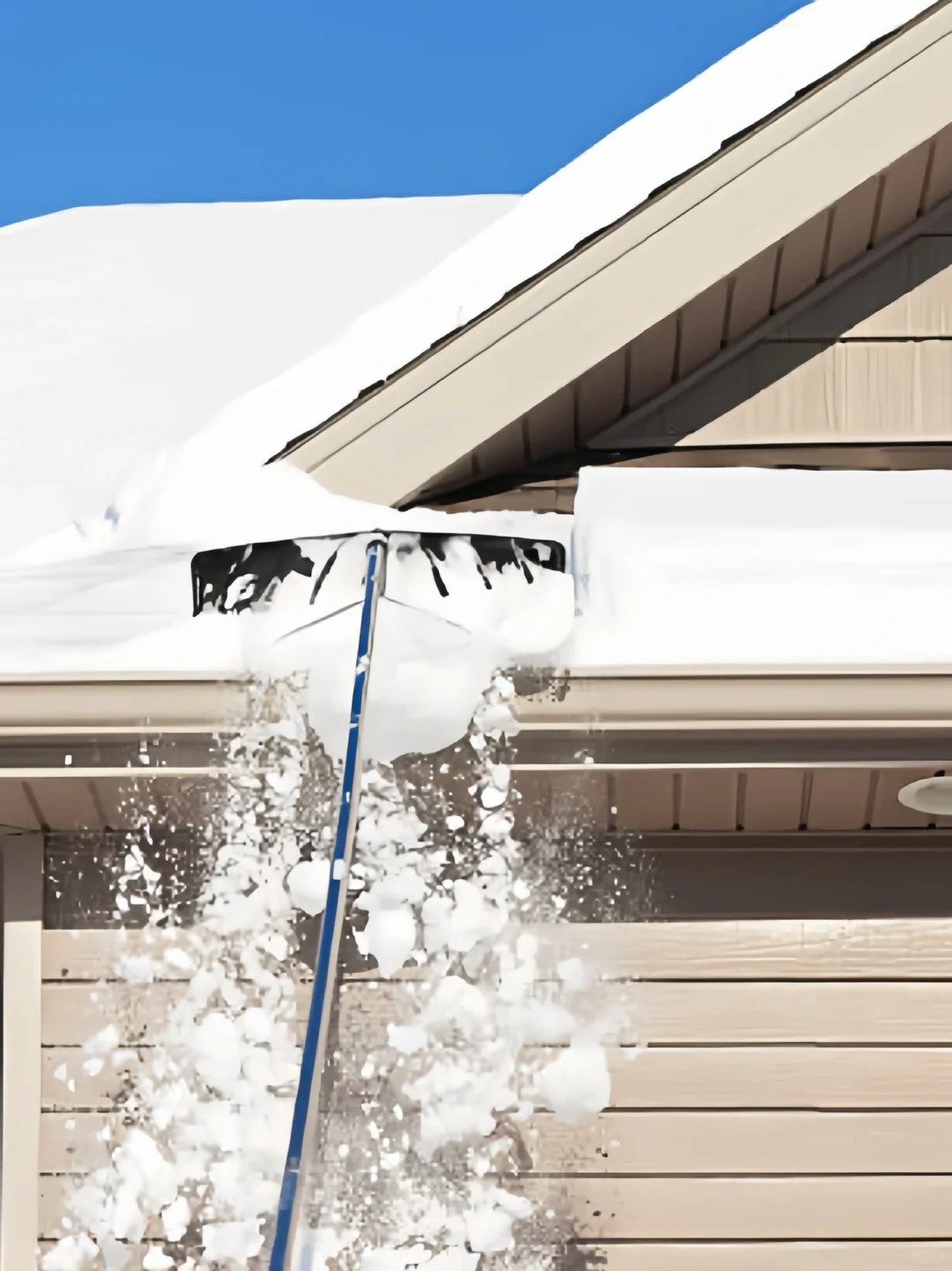
Ever wondered how to keep your roof safe from those pesky ice dams this winter? Ice dams can cause serious damage, but you can prevent them effectively with the right tools and techniques. This blog will cover everything you need to know about using a roof rake safely, from preparation to execution, and even maintenance tips.
By the end of this guide, you’ll be equipped with practical knowledge and actionable steps to protect your home. Let’s get started and make sure your winter is worry-free!
What Are Ice Dams and Why Are They a Big Deal?
What Are Ice Dams?
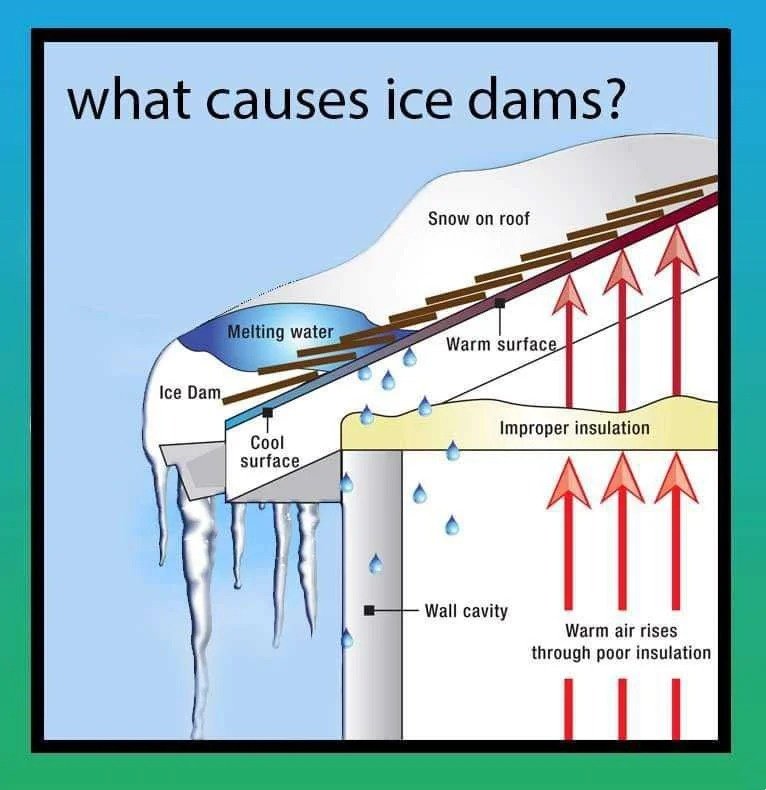
Ice dams are thick ridges of ice that form along the edges of your roof. They happen when the snow on your roof melts due to heat escaping from your home, then refreezes when it reaches the colder eaves. This creates a barrier that stops melting snow from draining off the roof.
Why Are Ice Dams a Problem?
Ice dams are more than just a winter nuisance—they can cause serious damage to your home. Here’s why:
- Roof Damage: Ice dams can lift shingles, causing leaks and water damage.
- Gutter Issues: The weight of the ice can pull gutters away from the house, leading to structural damage.
- Interior Water Damage: Water trapped by ice dams can seep into your home, damaging walls, ceilings, and insulation.
- Mold Growth: Persistent moisture can lead to mold and mildew, posing health risks.
Preventing ice dams isn’t just about protecting your roof—it’s about safeguarding your entire home. Let’s dive into how you can use a roof rake to keep your roof clear and avoid these problems.
Understanding Roof Rakes
What Exactly is a Roof Rake?
A roof rake is a long-handled tool designed to help you remove snow from your roof without having to climb up there yourself. It typically features a wide, flat head that allows you to pull snow off the roof, clearing it away safely from the ground.
Different Types of Roof Rakes
Choosing the right roof rake can make a big difference in how effectively you can clear snow from your roof. Here are some common types:
- Standard Roof Rakes: These are basic models with a fixed-length handle and a wide, flat head. They’re great for single-story homes and light snowfalls.
- Telescoping Roof Rakes: These rakes have extendable handles that can reach higher roofs, making them ideal for multi-story homes or homes with steep roofs.
- Wheeled Roof Rakes: These feature small wheels on the rake head, which help to prevent damage to shingles while you’re raking off the snow. They’re especially useful if you’re worried about scratching or damaging your roof.
- Adjustable Roof Rakes: These allow you to adjust the angle of the head, making it easier to use on different roof slopes and ensuring you can get the snow off more efficiently.
How Roof Rakes Help Prevent Ice Dams
Regularly using a roof rake can be a game-changer when it comes to preventing ice dams. Here’s how they help:
- Reduces Snow Accumulation: By raking the snow off your roof, you prevent it from accumulating and melting, which can create ice dams.
- Lowers Roof Load: Less snow means less weight on your roof, which can help prevent structural damage.
- Improves Water Drainage: Clearing snow helps ensure that water drains properly off the roof, reducing the risk of it refreezing and forming ice dams.
- Minimizes Risk of Roof Leaks: By keeping your roof clear, you reduce the chances of water seeping in and causing leaks or other damage.
Using a roof rake might seem straightforward, but there are a few key things you should know to do it safely and effectively. Next, we’ll cover how to prepare for safe roof raking.
Preparing for Safe Roof Raking
Inspect Your Roof Before Snow Falls
Before the first snowfall of the season, it’s a good idea to inspect your roof. Here’s what you should look for:
- Damaged Shingles: Check for missing, cracked, or loose shingles that could be further damaged by snow and ice.
- Weak Spots: Look for any areas that seem weak or sagging, as these could be problematic once the snow starts to accumulate.
- Gutter Condition: Make sure your gutters are securely attached and free of debris, as clogged or damaged gutters can exacerbate ice dam issues.
By identifying and repairing these issues before winter, you’ll make your roof more resilient and safer for snow removal.
Clear the Ground Area
Safety should always be your top priority when using a roof rake. Make sure the area around your house is free of obstacles that could cause you to trip or fall. Here’s a checklist to help you prepare:
- Remove Patio Furniture: Store away or move any outdoor furniture that might be in your work area.
- Clear Away Tools and Equipment: Make sure garden tools, hoses, and other equipment are stored away.
- Mark Any Hazards: If there are any permanent obstacles (like large rocks or decorative features), mark them clearly so you can avoid them.
Creating a clear and safe workspace will make it easier and safer for you to use your roof rake.
Ensure Proper Gear and Equipment
Having the right gear is essential for safe and effective roof raking. Here’s what you’ll need:
- Non-Slip Boots: These will give you better traction on icy or snowy ground.
- Warm Clothing: Dress in layers to stay warm, but make sure your clothing allows for easy movement.
- Gloves: Choose gloves that provide warmth and a good grip.
- Safety Goggles: Protect your eyes from falling snow and ice.
In addition to personal gear, make sure your roof rake is in good condition. Check the handle for any cracks or damage, and ensure the rake head is securely attached.
Now that you’re prepared, let’s move on to some essential safety tips for using your roof rake.
Essential Safety Tips for Using a Roof Rake
Stay Alert for Falling Snow and Icicles
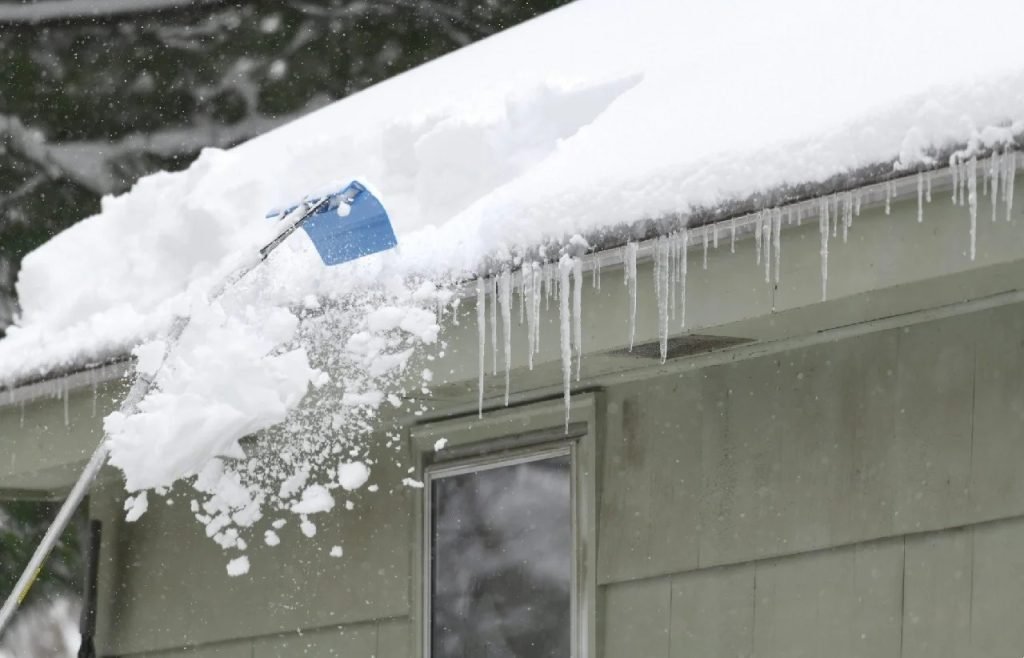
When you’re using a roof rake, one of the biggest dangers is the risk of snow and icicles falling on you. Here’s how to stay safe:
- Position Yourself Correctly: Always stand to the side of where you’re raking. This way, if snow or icicles fall, they won’t land directly on you.
- Wear Protective Gear: A hard hat or helmet can protect your head, and goggles can shield your eyes from falling debris.
- Check the Roof Beforehand: Look for large icicles or heavy snow overhangs that could come down while you’re raking.
Watch Out for Power Lines
Power lines can be a serious hazard when using a roof rake. Here’s what to keep in mind:
- Maintain a Safe Distance: Always keep your roof rake well away from power lines. Even non-metal rakes can conduct electricity if wet.
- Be Aware of Your Surroundings: Know where power lines are in relation to your roof and plan your raking path accordingly.
- Use Non-Conductive Rakes: If possible, use a rake specifically designed to be non-conductive to minimize risk.
Avoid Overreaching and Overexertion
Using a roof rake can be physically demanding. Follow these tips to avoid injury:
- Take Frequent Breaks: Don’t try to clear the entire roof in one go. Take regular breaks to avoid fatigue.
- Use a Long-Handled Rake: This allows you to reach higher without straining or overreaching.
- Work in Sections: Tackle the roof in small sections, raking a bit at a time to avoid overexerting yourself.
Dress for the Weather
Working outside in winter conditions requires proper attire:
- Layer Up: Wear multiple layers to stay warm, but make sure you can move easily.
- Wear Waterproof Boots: Keeping your feet dry and warm is crucial.
- Use Gloves: Protect your hands from the cold and provide a better grip on the rake.
Keep Your Roof Rake in Good Condition
A well-maintained roof rake is essential for safe and effective use:
- Check for Damage: Before use, inspect your rake for any cracks or damage.
- Keep It Clean: Remove any dirt or debris that could affect its performance.
- Store Properly: Store your rake in a dry place to prevent rust and damage.
Additional Safety Tips
- Work with a Partner: Having someone with you can be helpful in case of an emergency.
- Be Mindful of Roof Integrity: If your roof is old or damaged, consider professional help to avoid causing more damage.
- Stay Grounded: If you feel unsafe at any point, stop and reassess. Your safety is more important than clearing the roof.
By following these tips, you can safely and effectively use a roof rake to keep your home free of excess snow and ice. Always prioritize safety and take your time to avoid accidents.
Step-by-Step Guide to Using a Roof Rake
Best Practices for Raking a Pitched Roof
Using a roof rake on a pitched roof requires some careful planning and technique. Here’s how to do it right:
Start from the Edge
- Begin at the Roof Edge: Always start at the edge of the roof and work your way towards the center. This helps prevent snow from piling up and creating more weight.
- Pull Snow Downward: Use a gentle pulling motion to bring the snow down. Don’t push it upwards, as this can damage your shingles.
Maintain a Safe Stance
- Stay on the Ground: Never climb onto your roof with a rake. Always work from the ground to avoid slipping and falling.
- Use a Long-Handled Roof Rake: Make sure your rake is long enough to reach the highest points without you needing to stretch or climb.
Handling Different Roof Materials
Different roof materials require different handling to avoid damage. Here’s what to keep in mind:
Asphalt Shingles
- Gentle Raking: Be gentle when raking asphalt shingles to avoid tearing or dislodging them.
- Avoid Metal Rakes: Use a plastic or rubber rake to minimize the risk of damage.
Metal Roofs
- Non-Scratch Rake: Choose a rake with a non-scratch head to avoid damaging the metal surface.
- Work Slowly: Metal roofs can be slippery, so take your time to avoid losing control of the rake.
Tile Roofs
- Extra Care: Tiles can crack easily, so use extra caution.
- Use a Foam Rake: Consider using a rake with a foam head to protect the tiles from cracking.
Techniques for Effective Snow Removal
Using the right technique makes all the difference in effective snow removal. Here’s how to get the best results:
Layer by Layer
- Remove Snow in Layers: Instead of trying to pull off deep snow all at once, remove it layer by layer. This makes the job easier and reduces the risk of damage.
- Light Pressure: Apply light pressure to avoid scraping or damaging the roof.
Avoid Overloading
- Don’t Overload the Rake: Don’t try to pull too much snow at once. Overloading the rake can make it hard to control and increase the risk of damage.
- Frequent Clearing: Clear the rake frequently to ensure it doesn’t become too heavy or unwieldy.
Additional Tips for Using a Roof Rake
Regular Maintenance
- Inspect Your Rake: Check your rake before each use for any signs of damage or wear.
- Clean After Use: Clean off any debris or snow residue after each use to keep it in good condition.
Safety First
- Be Aware of Surroundings: Always be mindful of where you’re raking and any potential hazards like power lines or fragile roof features.
- Use Proper Footwear: Wear sturdy, non-slip boots to maintain good footing on icy or snowy ground.
Work with a Partner
- Buddy System: Having someone with you can provide extra safety and help if you need assistance.
By following these steps and tips, you can effectively and safely use a roof rake to manage snow buildup on your roof. Remember, taking your time and using the right techniques will help protect your roof and keep you safe during winter.
How to Deal with Ice Dams Using a Roof Rake
Spotting Ice Dams on Your Roof
Ice dams can cause serious damage if not addressed. Here’s how to identify them:
Look for Key Signs
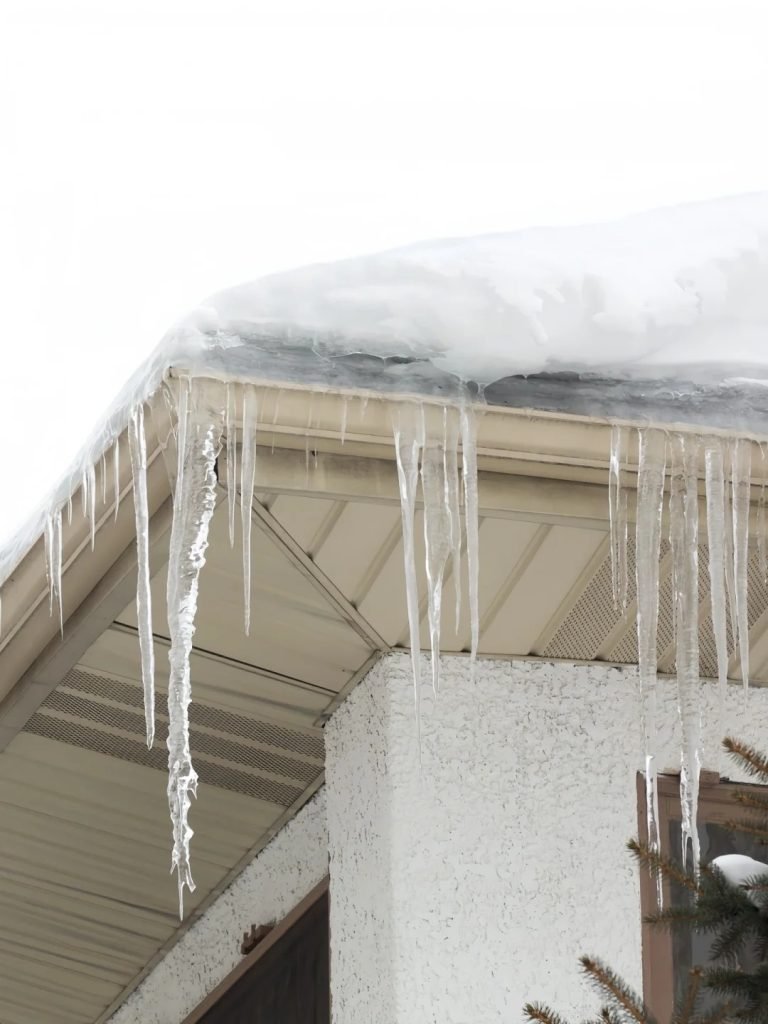
- Icicles on the Roof Edge: While icicles can be pretty, they often signal the presence of an ice dam.
- Water Stains on Ceilings: If you notice water stains inside your home, it might be due to ice dams causing leaks.
- Ice Build-Up: Ice building up along the gutters or at the roof edge is a clear sign of ice dams.
Inspect After Snowfall
- Regular Checks: After heavy snowfall, check your roof for signs of ice dams. The sooner you spot them, the easier they are to manage.
Safely Removing Ice Dams with a Roof Rake
Removing ice dams safely is crucial to avoid damage to your roof and injury to yourself. Here’s how to do it:
Use the Right Roof Rake
- Choose a Roof Rake with Rollers: These are designed to protect your shingles while you rake.
- Non-Metal Heads: Use a rake with a non-metal head to avoid scraping or damaging the roof surface.
Start from the Edge
- Clear Snow First: Before tackling the ice, use your roof rake to remove as much snow as possible from the edge of the roof.
- Pull, Don’t Push: Gently pull the rake towards you to avoid pushing snow and ice further up the roof.
Safe Ice Removal Techniques
Direct ice removal requires care and the right techniques. Here’s how to do it safely:
Hot Water Method
- Use Hot Water: Fill a spray bottle with hot water and gently spray the ice dam to melt it gradually.
- Work in Sections: Don’t try to melt the entire dam at once. Focus on small sections to control the process better.
Calcium Chloride Socks
- Fill Socks with Calcium Chloride: Use old socks or pantyhose filled with calcium chloride to melt the ice.
- Lay Across the Dam: Place the filled socks vertically across the ice dam to create a channel for the water to flow off the roof.
Knowing When to Call a Professional
Sometimes, it’s best to call in the experts. Here’s when to seek professional help:
Severe Ice Dams
- Large Ice Dams: If the ice dam is too large or widespread, it’s safer to let professionals handle it.
- Persistent Issues: If ice dams keep forming despite your efforts, there might be underlying issues that need professional assessment.
Roof Safety Concerns
- Steep Roofs: If your roof is too steep or difficult to access, don’t risk injury. Call a professional.
- Damage to Roof: If there are signs of roof damage or you’re unsure about safely removing the ice, get expert help.
Extra Tips for Ice Dam Prevention
- Improve Insulation: Proper insulation in your attic can prevent the heat that causes ice dams.
- Ventilation: Ensure your attic is well-ventilated to keep the roof cold and prevent melting snow from refreezing.
- Regular Maintenance: Keep your gutters clean and free of debris to allow proper water drainage.
By following these steps and knowing when to call for help, you can effectively manage and prevent ice dams using a roof rake. Remember, safety and prevention are key to protecting your home during winter.
Conclusion
Taking care of your roof during winter can seem daunting, but with the right tools and techniques, it’s totally manageable. Regularly using a roof rake, staying alert for potential issues, and knowing when to call in the pros will keep your roof in great shape and your home safe.
Don’t let ice dams and heavy snow catch you off guard this winter. Get your roof rake ready, follow these tips, and enjoy a worry-free season!